OplaCRM Enterprise
About
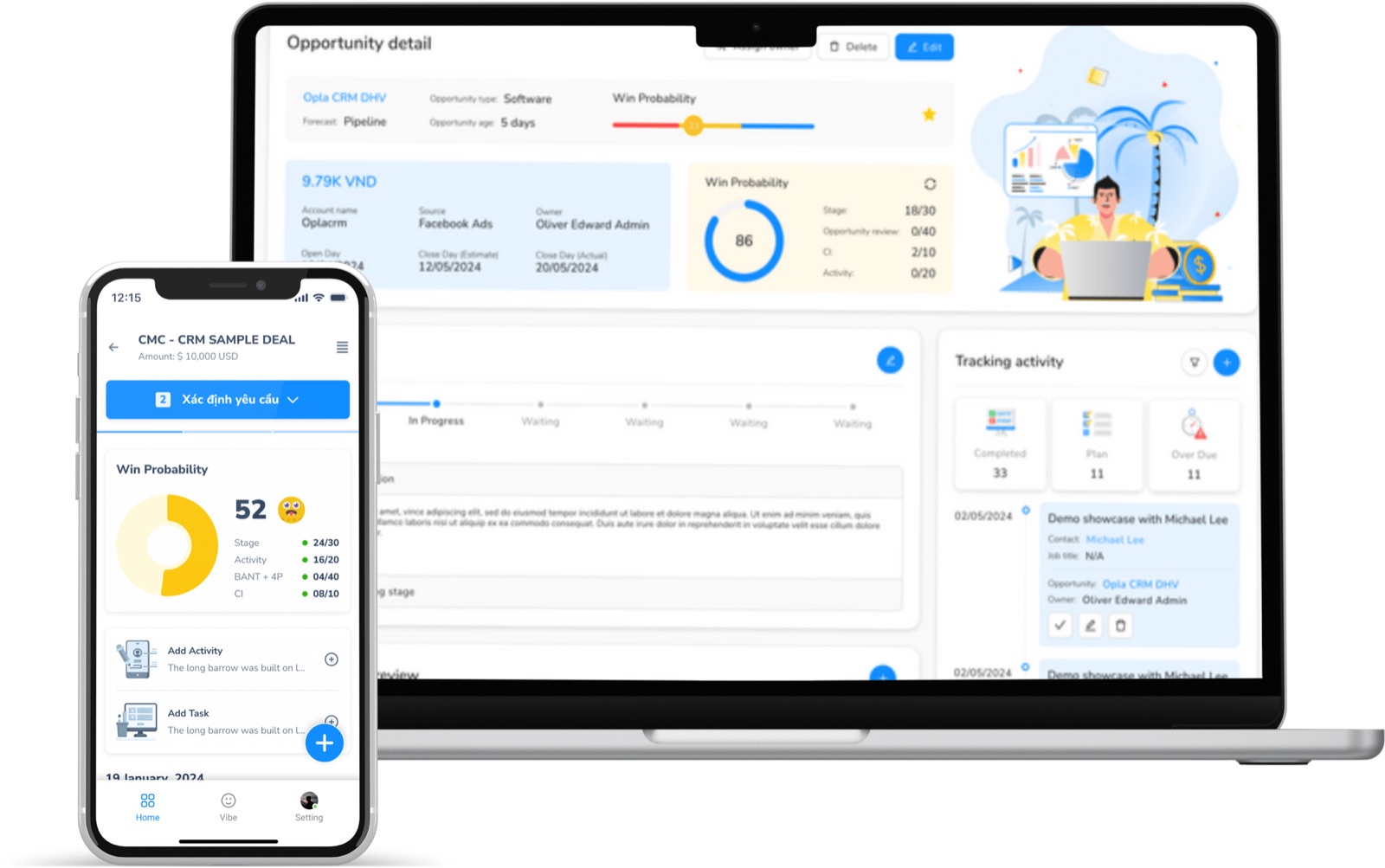
OplaCRM is a gamified B2B CRM that lets sales teams focus on relationships instead of data entry.
Outcome
Over 2.5 years on a 10-person product team, I was lead contributor to OplaCRM Enterprise across all three fronts — web, mobile, and backend — while co-building OplaGO, the next-generation CRM, from zero. I was recognized as a top performer in quarterly reviews and pioneered the team's AI-agent workflow with 20+ internal skills.
Problem
Traditional CRMs are designed for managers, not salespeople: reps get turned into data-entry clerks, so the data is always incomplete and stale, and every report built on it becomes meaningless.
Opla's challenge: make salespeople want to use the CRM every day — and keep the system fast and reliable enough for enterprise customers.
Context
- Target customers are Vietnamese B2B companies with long, multi-touch sales cycles.
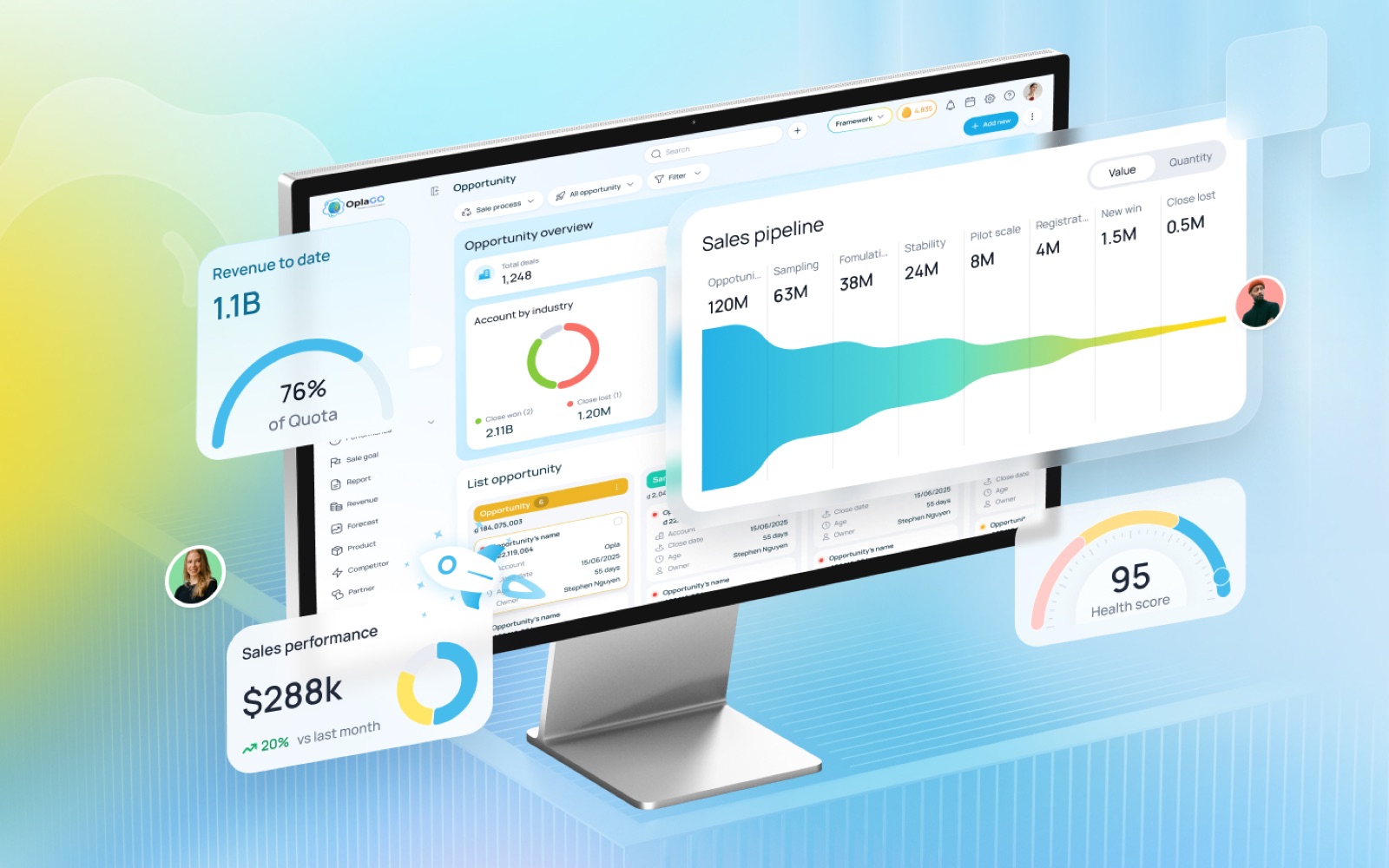
- The product competes on a gamified experience: relationship Healthscore, Deal Score, and Close-Lost analysis.
- A 10-person team had to run the live Enterprise product while building next-gen OplaGO — demanding very high per-engineer output.
Product System
The architecture splits into three layers; I worked across all three:
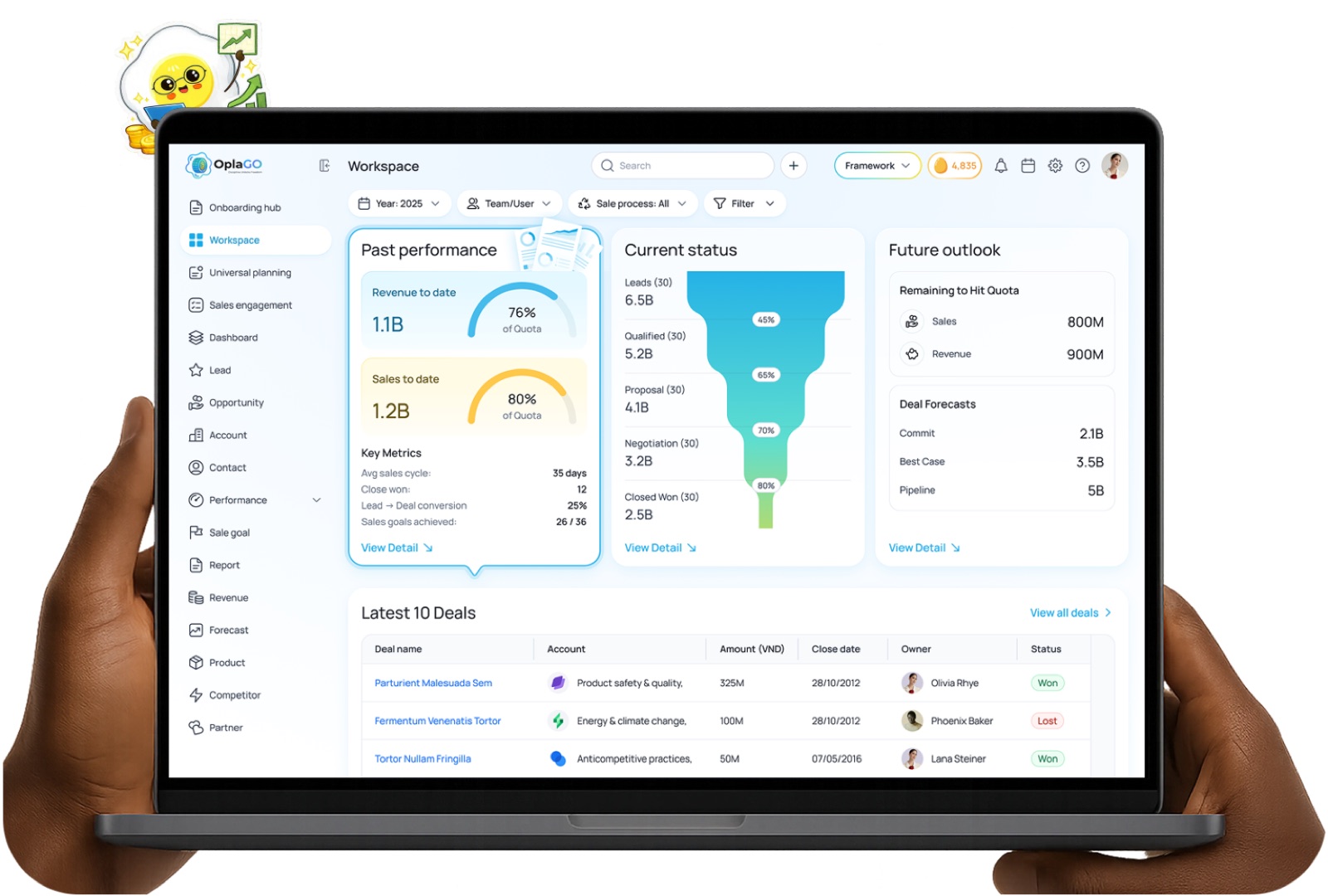
- Web — React + Apollo GraphQL, gamified UI and analytics dashboards.
- Mobile — React Native, bringing the full CRM experience to iOS/Android.
- Backend — Golang microservices + Hasura GraphQL on PostgreSQL; OplaGO uses NestJS + TypeORM.
On process, I built the AI-agent workflow layer: 20+ internal Claude Code skills for repetitive tasks (module scaffolding, migrations, reviews), helping the whole team ship faster without trading away quality.
Role
- Lead contributor across web, mobile, and backend of OplaCRM Enterprise
- Co-built OplaGO from greenfield (NestJS, TypeORM, PostgreSQL)
- Designed and shipped analytics features: Healthscore, Deal Score, Close-Lost
- Pioneered the AI-agent workflow — 20+ internal skills for the team
Learnings
True fullstack is a double advantage
Working across web–mobile–backend let me design APIs for real interface needs from day one, instead of patching things up at the client layer.
Team throughput beats personal throughput
The 20+ internal skills I wrote didn't just speed me up — they raised the whole team's baseline. That's the biggest lever a senior engineer can pull.
Gamification must serve the data
Scores only matter when they reflect real sales behavior. Designing Healthscore taught me every game mechanic has to answer: "what does this score make the user do differently?"